
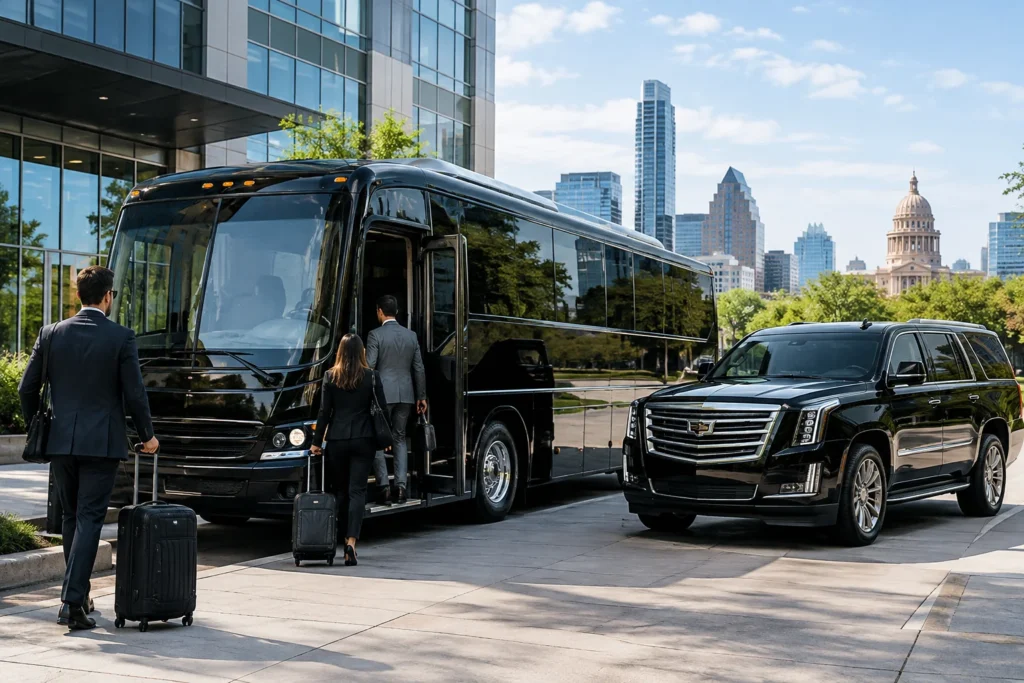
Planning transportation for an event is rarely as simple as booking a few cars and hoping for the best. Between changing numbers of people unpredictable traffic and the need to make a first impression on clients or executives the planning can become very complicated very quickly. If you’re organizing anything from a small board meeting to a convention having a clear transportation plan protects your schedule, your budget and your companys reputation with every guest who steps into a vehicle.
This guide walks through the decisions that go into arranging Corporate Event Transportation Austin businesses can rely on from choosing the right vehicles to handling last-minute changes. Whether you need an executive shuttle service or a full fleet for a multi-day conference these strategies will help you plan with confidence and avoid the common mistakes that can ruin an otherwise well-organized event.
Why Corporate Event Transportation Matters in Austin
Austins business scene has grown fast. So has the traffic that comes with it. A reliable Corporate Travel Service does more than move people from point A to point B. It sets the tone for the event. Guests who arrive late confused or stressed rarely start a meeting in the frame of mind and that stress can carry into negotiations, presentations or client relationships that took months to build.
Beyond convenience organized transportation reflects on your companys professionalism. When executives, clients or conference attendees are picked up on time in a comfortable vehicle it signals that every detail of the event has been considered. That first impression often carries into how the rest of the day’s perceived and it can be the difference between a guest who feels valued and one who feels like an afterthought.
Assessing Your Group Size and Transportation Needs
Before booking anything take a look at your numbers. A ten-person leadership retreat has different needs than a 200-person seminar and guessing at capacity almost always leads to either wasted spend or a scramble for extra vehicles at the last minute. Start by confirming a headcount, including any last-minute additions you can reasonably anticipate based on RSVP trends.
It also helps to map out the event itself. Are people arriving at one time or in waves across a day? Do you need continuous group transportation Austin support or just a single pickup and drop-off? Answering these questions early makes every decision, from vehicle type to budget allocation much easier to finalize without second-guessing yourself closer to the event date.
Choosing the Right Vehicle Type for Your Event
Not every corporate event calls for the vehicle. A small executive meeting might only need a sedan or SUV while a larger gathering benefits from a shuttle bus or full-size coach that can move dozens of people in a single trip. Matching vehicle type to group size keeps costs without sacrificing comfort or making guests feel cramped during longer rides.
Consider the nature of the trip well. Airport transfers for VIP clients often call for a polished option like an Austin Limo Service while moving dozens of employees between a hotel and a downtown venue is better suited to shuttle vehicles built for volume and efficiency. Thinking through the purpose of each leg of the trip helps you avoid overpaying for capacity you don’t actually need.
Booking Charter Buses vs. Private Car Services
Charter buses and private cars each serve a purpose and many events actually need both working together. Charter buses are efficient for groups traveling together on a fixed schedule, such as moving attendees from a hotel block to a conference center in one coordinated trip. They reduce the number of vehicles on the road simplify parking arrangements and make headcount tracking easier for your team.
Private car services on the hand are better suited to executives, VIP guests or anyone whose schedule doesn’t align with the groups. A hybrid approach. Buses for the bulk of attendees and private cars for individuals. Often delivers the best balance of cost control and personalized service for corporate guest transportation across a mixed-need event.
Planning Routes Around Austin Traffic Patterns
Austin traffic can be unpredictable around I-35, MoPac and the downtown core during peak hours. A transportation plan that ignores these patterns risks turning a ten-minute trip into a forty-minute delay, which throws off everything scheduled afterward from meeting start times to catering deliveries. Building in buffer time isn’t optional. It’s a requirement for any dependable plan.
Experienced local providers know which routes tend to bottleneck and when and they can adjust times or alternate paths accordingly to keep guests on schedule. If your event coincides with a festival university move-in weekend or major game day factor that into your conference transportation planning well in advance than discovering the conflict the week of the event.
Coordinating Pickup and Drop-off Details
Clear coordination prevents the kind of confusion that makes guests feel lost before an event even begins. Designate specific pickup zones, communicate them clearly in advance through email or event apps. Make sure signage or staff are available to direct people at busy locations like hotels or airports. Vague instructions are one of the common and easily avoidable causes of transportation delays.
Drop-off planning deserves the attention particularly at venues with limited curb space or restricted loading zones. Staggering arrival times for groups rather than sending every vehicle at once keeps the flow moving and avoids a bottleneck of buses and cars all converging on one entrance simultaneously during peak arrival windows.
Working with Local Austin Transportation Vendors
vendors bring something national chains often can’t: genuine familiarity with the citys neighborhoods, venues and seasonal quirks. A provider who regularly handles corporate transportation Austin events will already know which hotels have loading areas or which venues require advance parking permits saving you from learning those lessons the hard way on event day.
Building a relationship with a trusted vendor also pays off over time in ways that compound. Repeat business often means rates, priority scheduling during busy seasons like SXSW or F1 weekend and a provider who understands your companys preferences without needing everything re-explained each time you book.
Budgeting for Corporate Transportation Services
Transportation costs can vary depending on vehicle type, trip length and how far in advance you book your service. Getting quotes from a providers for the same scope of service helps you compare fairly rather than judging price alone without understanding whats actually included. Always ask about gratuity wait time and fuel surcharges since these can change the bill significantly.
It’s also worth budgeting some flexibility for contingencies that come up during the event itself. Setting aside a buffer for an extra vehicle or an unplanned late-night pickup can save you from a stressful expensive scramble if plans shift once the event is already underway and options become limited.
Ensuring Safety and Compliance Standards
Safety should never be an afterthought when booking transportation for employees or clients. Confirm that any provider you work with maintains licensing, insurance and vehicle maintenance records and ask directly about driver background checks and ongoing training programs. These details matter more than a polished website or a suspiciously low quote from an unfamiliar company.
Compliance also extends to accessibility considerations for your guests. If your event includes attendees who need wheelchair- vehicles or other accommodations communicate that need early so the provider can allocate the right equipment rather than trying to arrange it last minute under pressure.
Leveraging Technology for Real-Time Tracking
transportation providers often offer GPS tracking and live updates which can be a genuine advantage for event coordinators juggling multiple moving parts at once. Knowing where a shuttle is and how far out it is from the venue lets your team adjust the agenda on the fly instead of guessing or fielding repeated phone calls from anxious attendees.
Some services also offer driver communication apps or automated dispatch notifications which’re especially useful for Seminar Transportation involving multiple pickup points across a city. Having this visibility reduces the number of calls your team needs to make to confirm a vehicle is still on schedule and running on time.
Handling Last-Minute Changes and Contingencies
Even the planned event runs into surprises. A flight delay, a sudden venue change or an unexpected increase in headcount just before the event begins. Having a provider who can respond quickly to these changes matters more than having the rate on paper. Ask upfront how a company handles last-minute requests before you commit to a contract.
It also helps to have a point of contact on your own team who can communicate directly with the transportation coordinator throughout the day. This avoids the confusion of people relaying conflicting instructions during a moment when quick clear communication is what actually solves the problem efficiently.
Measuring. Gathering Attendee Feedback
Once the event wraps up it’s worth taking a minutes to evaluate how transportation actually performed against your plan. Were pickups on time? Did any routes cause delays or confusion at the venue? Documenting these details makes planning your next event significantly easier since you’re working from experience rather than starting from scratch each time.
Attendee feedback is another source of insight especially for larger events like a Business Convention Transportation program involving dozens or hundreds of guests. A short survey question about the transportation experience can highlight issues you might not have noticed firsthand and help you refine vendor selection for events.
Final Thoughts
Corporate event transportation in Austin doesn’t have to be a source of stress if you plan with intention and enough lead time. Matching vehicle types to your group accounting for traffic patterns and partnering with a dependable local vendor go a long way toward a smooth experience for everyone involved. The goal isn’t just getting people from one place to another. Its making sure transportation supports the professionalism and flow of your event from the first pickup, to the final drop-off.
FAQs
Q1. How far in advance should I book transportation in Austin?
For events or busy periods like SXSW booking four to six weeks ahead is a good rule of thumb. Smaller trips can often be arranged with a week or two of notice though earlier is always safer.
Q2. What’s the difference between a shuttle service and a private car service?
Shuttle services are designed for moving groups on a set schedule while private car services offer more personalized transportation for individuals or small parties such as executives or VIP clients.
Q3. Can transportation providers accommodate last-minute headcount changes?
Many local providers can adjust for changes but its best to communicate any shifts as early as possible so they can allocate the right vehicles and drivers in time.
Q4. Do I need transportation for VIP guests?
It depends on the event. Pairing a shuttle for general attendees with a private car service, for VIPs is a common and cost-effective approach that many companies use.